
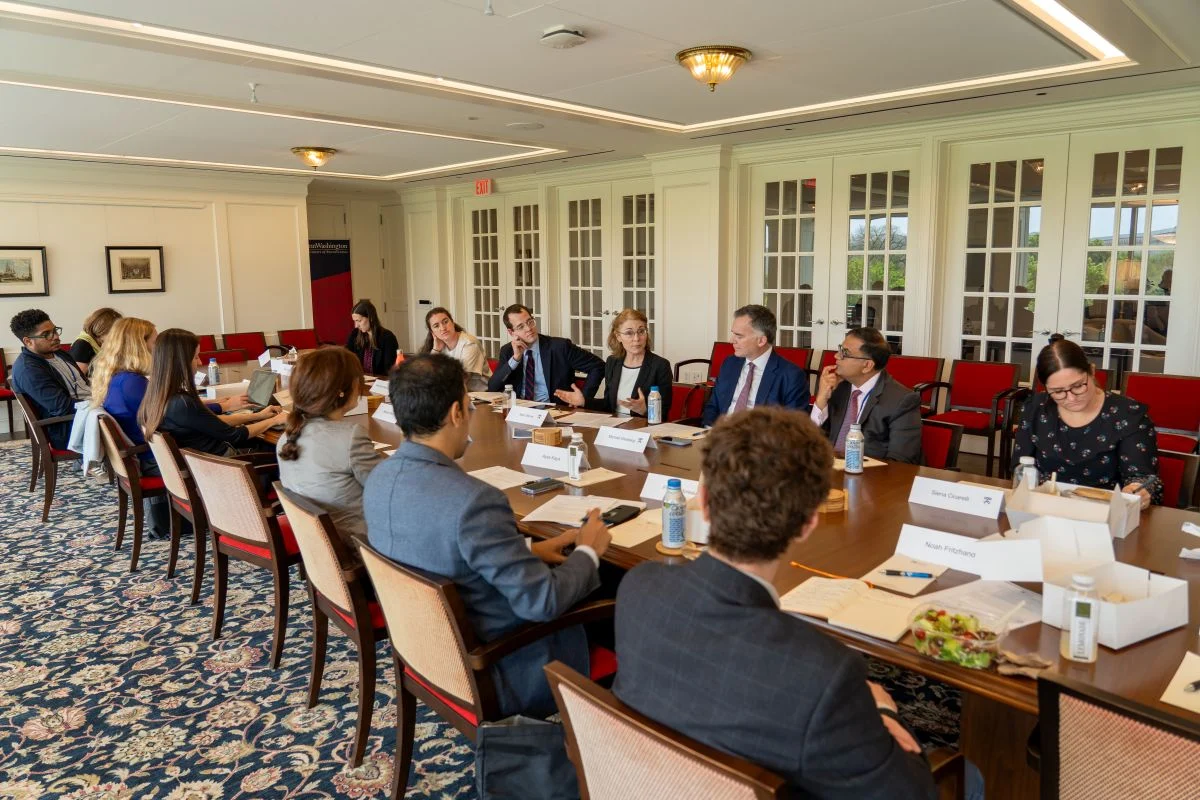
Perry World House, in collaboration with the International Peace Institute (IPI) and United Nations University (UNU), convened an expert roundtable titled The Road to 1.3T: The Baku to Belem Roadmap. The discussion examined how multilateral institutions, countries, and subnational actors can deliver ambitious climate finance targets under complex economic and geopolitical conditions.
The roundtable addressed structural challenges, including rising debt, underfunded climate finance, and the high cost of capital, while highlighting the need for differentiated approaches for mitigation, adaptation, and loss and damage. Experts stressed the importance of aligning national and subnational priorities, improving data on local finance needs, and expanding access to MDB and private capital.
UNU-CPR’s Dr. Michael Franczak and Dr. Koko Warner (International Organization for Migration) advanced a framework for operationalizing innovative finance through “full-spectrum” climate finance packages: strategies tailored to national conditions that combine fiscal tools (e.g., green subsidies) and monetary instruments (e.g., concessional loans and guarantees), sequenced to crowd in private capital and stabilize transitions over time. Drawing on real-world examples from South Africa’s JET-P to deals in Senegal and Vietnam, the discussion examined delivery gaps, institutional bottlenecks, and the importance of integrating social support and energy security into large-scale climate finance packages.
The roundtable highlighted policy recommendations including scaling private finance mobilization, strengthening subnational finance channels, bolstering MDB capacity, and ensuring just transitions, all framed within the broader goals of the Baku to Belem Roadmap. The session emphasized that achieving .3 trillion in climate finance requires concrete, coordinated action, innovative mechanisms, and strengthened fiscal and institutional frameworks to support sustainable and equitable development.