
2025 is a pivotal year for climate action, marking ten years of the Paris Agreement, 20 years since the Kyoto Protocol’s entry into force, and 30 years of global climate conferences. Brazil’s hosting of COP30 in Belém – a key site in the Amazon, the heart of the climate crisis – underscores the urgency of transformative governance.
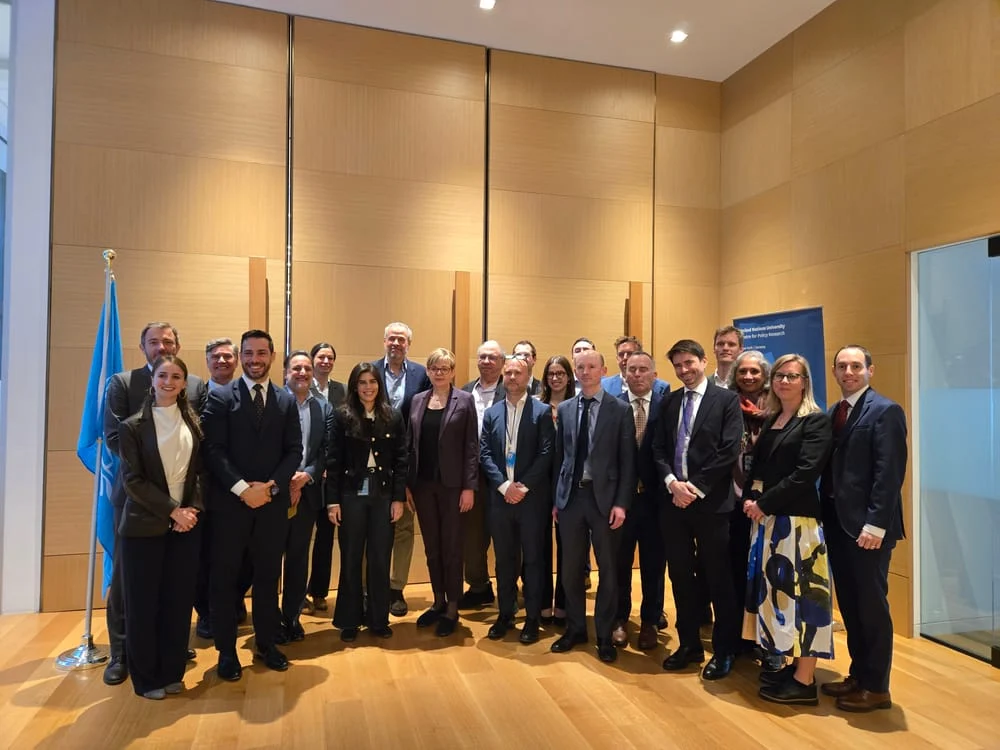
Hosted by the United Nations University Centre for Policy Research (UNU-CPR) in collaboration with the Governments of Brazil and Germany, this Chatham House workshop brought together around 25 experts. Framing remarks were delivered by H.E. André Aranha Corrêa do Lago, COP30 President.
Discussions emphasized that addressing climate change requires governance structures capable of coordinating responses across all levels, from the sub-national to the global. Participants highlighted how effective climate action is inseparable from broader challenges such as hunger, poverty, debt, and development, and underscored the need for international financial institutions to deliver resources at the necessary speed and scale.
Building on President Lula’s invitation at the 2024 G20 Summit in Rio to consider a new United Nations Climate Change Council, the workshop examined governance models, institutional innovations, and prototypes that could inform the future of climate governance. Lessons were drawn from global finance, public health, agriculture, food security, pandemic prevention, and sustainable development.
Participants explored how upgraded institutions could leverage complexity science, systems thinking, and distributed action to improve preparedness, accelerate the diffusion of solutions, and overcome systemic bottlenecks. If designed as a permanent platform, a UN Climate Change Council could serve as a node of hyperconnectivity—aligning efforts, sharing knowledge, and coordinating resources to ensure climate action is integrated with broader global agendas.